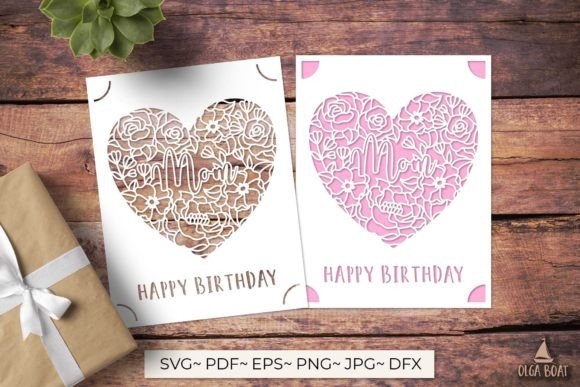
Mom Birthday Card Happy Birthday Mom: A Designer's Review
As a designer who spends more time staring at stitch simulations than I do sleeping, I approach every new machine embroidery design with a healthy dose of skepticism. We have all seen those files that look adorable on a screen but turn into a tangled mess of thread breaks and puckering once they hit the hoop. So, when I pulled up the Mom Birthday Card Happy Birthday Mom file to evaluate it for real-world application, my primary goal wasn't just to see if it was cute. I wanted to know if it could hold up under the pressure of a commercial order or a high-stakes personalized gift.
This Graphics asset, categorized under Crafts, initially presents itself as a versatile template suitable for Cricut Joy card inserts and larger cutting projects. However, from an embroidery perspective, the potential here extends far beyond paper goods. The layout suggests a clean, typographic focus that translates well into thread, provided you manage your expectations regarding scale and fabric choice. Let's break down how this design performs when you move from digital preview to actual stitching.
First Impressions and Visual Personality
The first thing that strikes me about the Mom Birthday Card Happy Birthday Mom concept is its straightforward emotional appeal. It avoids overly complex swirls or microscopic details that often plague birthday-themed designs. Instead, it relies on strong lettering and balanced spacing. For an embroiderer, this is a relief. Complex scripts can be a nightmare to digitize properly, but a design rooted in clear shapes usually indicates better stitch flow.
The mood is warm and celebratory without being cluttered. When I visualize this stitched out, I see it working best as a focal point rather than a background element. The visual personality feels modern yet timeless, which is crucial for a handmade product intended to be kept as a keepsake. If you are selling these as Etsy seller listings or boutique items, the clean lines suggest a level of professionalism that customers trust. It doesn't scream "cheap clipart"; it whispers "thoughtful custom creation."
Real-World Application: The Tote Bag Scenario
To truly test the viability of this design, I imagined a specific client request: a custom embroidered tote bag for a mother's birthday surprise. This is a common embroidery project for small shop owners. Tote bags usually feature a canvas or heavy cotton texture, which provides a stable base for stitching. In this scenario, the Mom Birthday Card Happy Birthday Mom design shines because the text is legible even at a moderate size.
If I were running this on a sweatshirt or a thick apron, the design's structure would likely hold up well against the fabric texture. The key here is the perceived weight of the letters. Assuming the digitized version uses a solid fill stitch or a dense satin stitch for the main text, it would create a tactile, premium feel that elevates a simple cotton bag into a personalized gift worth paying extra for. For a craft business, this kind of versatility is gold. You aren't just selling a stitch-out; you are selling a solution for a customer who wants something unique for their mom.
Navigating Fabric Challenges and Hoop Limitations
However, we must address the limitations. While the description mentions suitability for 4.25" x 5.5" card inserts, translating this to embroidery requires careful attention to hoop size. If you are attempting this on a cap or a curved surface, the horizontal span of the text might be too wide for a standard cap frame without resizing to the point of illegibility. On stretchy fabrics like jersey knits used in baby embroidery or t-shirts, the density of the stitches becomes critical.
If the stitch density is too high, you risk puckering the fabric, especially on thinner materials. My advice is to always test the design on scrap fabric identical to your final product. If the design includes tiny connecting bridges between letters or intricate decorative elements, these are the first points of failure on textured towels or fuzzy fleece. For dark fabrics, you will need to carefully select thread colors that offer high contrast without clashing. A white or cream thread on navy blue is classic, but consider metallic threads for a holiday twist if the design allows.
Commercial Viability and Brand Consistency
For those of us running a small shop product line, consistency is everything. Using a design like Mom Birthday Card Happy Birthday Mom across different mediums—from embroidered patch applications to direct garment decoration—helps build brand recognition. If a customer sees this design on your social media printable mockup and then receives a physical finished product that matches that quality, you build immediate trust.
The design's simplicity also aids in production speed. In a commercial embroidery setting, time is money. Designs that require excessive trimming or frequent thread changes eat into margins. If this file is optimized correctly, it should run efficiently, allowing you to fulfill orders for holiday embroidery rushes or last-minute birthday requests without compromising quality. Just remember to verify the licensing terms. Since the original description highlights its use for cards and vinyl, ensure that the specific embroidery file you acquire permits commercial use for physical goods.
Practical Notes for the Professional Embroiderer
Before you commit to stitching this on a client's heirloom blanket or a batch of custom apparel, here are a few technical checks I recommend:
- Stabilizer Selection: Match your stabilizer to the fabric weight. A cut-away stabilizer is often safer for garments that will be washed frequently, ensuring the design assets remain crisp over time.
- Underlay Inspection: Check if the design includes adequate underlay stitching. This is crucial for preventing the fabric from showing through the fill areas, especially on dark garments.
- Scale Testing: What looks good at 5 inches might lose definition at 3 inches. Resize the design in your software and inspect the smallest details to ensure they won't merge into a blob of thread.
- Thread Contrast: Run a black-and-white simulation in your embroidery software. If the design loses its shape in grayscale, it might rely too heavily on color rather than form, which can be risky for certain applications.
Ultimately, the Mom Birthday Card Happy Birthday Mom design offers a solid foundation for creative entrepreneurs looking to expand their catalog. It bridges the gap between digital crafting and tangible textile art. Whether you are creating a tote bag design for a local market or a sweatshirt embroidery piece for an online store, the success lies in your execution. Treat the file as a raw material that requires your expertise to shine. With the right fabric, proper stabilization, and a keen eye for detail, this design can become a staple in your repertoire of design assets, delivering joy to moms and profitability to makers alike.
Always remember to check the specific file formats and machine compatibility provided by the seller, as these details are not inherent to the visual concept but are vital for your workflow. Happy stitching!