Call You Mom: A Designer's Review for Real Embroidery Projects
When I first pulled up the Call You Mom design file on my screen, my immediate reaction wasn't just about the aesthetic; it was about potential. As someone who spends hours hooping fabric, threading needles, and troubleshooting stitchouts for clients, I look at every digital embroidery file with a critical eye. Will this hold up on a heavy sweatshirt? Is the lettering too tight for a small cap? Does it have the personality needed to sell in a boutique? This review breaks down how Call You Mom performs when moved from the digital realm of Crafts and Graphics into the tangible world of thread and fabric.
First Impressions and Visual Personality
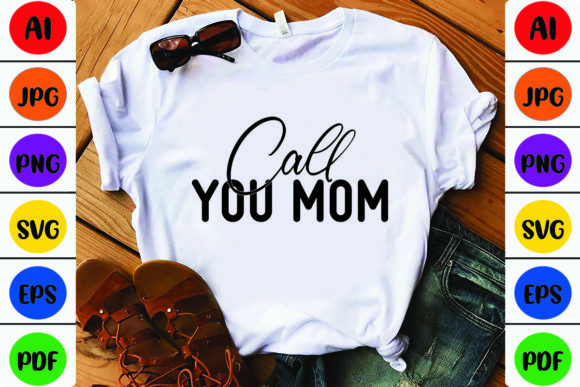
The mood of Call You Mom is warm, inviting, and slightly playful. It avoids the overly rigid structures often found in generic fonts, opting instead for a layout that feels hand-lettered and organic. For an embroidery project, this is crucial. Designs that feel too mechanical can look cold on a handmade product. The visual personality here suggests connection and affection, making it an ideal candidate for items meant to evoke emotion.
From a layout perspective, the balance between the text and any accompanying graphical elements seems well-considered. In embroidery, negative space is just as important as the stitches themselves. If a design is too dense, it creates a stiff patch on the fabric; if it's too sparse, it lacks impact. Call You Mom appears to strike a middle ground, suggesting a versatility that allows it to breathe on various materials without losing its definition.
Real-World Application: The Custom Tote Scenario
To truly evaluate this design, I imagined a specific real-life scenario: a customer order for a set of personalized tote bags for a mother-daughter brunch event. The client wanted something that looked professional but not mass-produced. Here is where Call You Mom shines. On a canvas tote bag design, the flow of the letters would likely translate beautifully into a combination of satin stitch for the outlines and a lighter fill stitch for the interior, depending on the specific file version you purchase.
For Etsy sellers or small shop product creators, this kind of adaptability is gold. You aren't limited to just one item. While the tote bag was my primary test case, I can easily visualize this working as sweatshirt embroidery on the chest of a cozy crewneck. The scale seems appropriate for standard hoop sizes, meaning you won't necessarily need a jumbo hoop to make it work, which saves time and reduces machine strain.
Versatility Across Product Lines
Beyond apparel and bags, consider the potential for home decor. A pillow cover or a kitchen tea towel featuring Call You Mom could be a standout item in a holiday collection. For holiday embroidery projects, specifically Mother's Day or Christmas gifts, the sentiment drives the sale. Customers aren't just buying a stitched item; they are buying a personalized gift that speaks directly to their relationship.
If you are running a craft business, you might also consider using this as an embroidered patch. Patches are incredibly popular right now, and a design with clear boundaries like this one could be backed with adhesive or sewn onto denim jackets and backpacks. This expands your inventory without requiring new machinery, simply by changing your application method.
Technical Considerations for Stitching
However, enthusiasm must be tempered with technical reality. Before committing to a full production run, there are several factors to assess regarding Call You Mom. One major consideration is stitch density. If the design relies heavily on dense fills, it may cause puckering on thinner fabrics like rayon or lightweight cotton blends. Always test the design on scrap fabric that matches your final material.
Lettering is another critical area. In embroidery, tiny details can get lost. If Call You Mom includes small connecting lines or intricate swashes, ensure they are wide enough to be covered by the thread without breaking. A running stitch might be used for finer details, which looks elegant but is less durable than satin columns. For items that will see frequent washing, like custom apparel or baby clothes, durability is key.
Fabric and Hoop Challenges
Where should you use caution? Curved surfaces present a challenge. If you plan to put this on a cap, the curvature can distort the text, making "Call You Mom" look warped. In such cases, a smaller version or a simplified variant of the design is often safer. Similarly, textured fabrics like thick wool or looped towels can obscure fine details. On these surfaces, a bolder version of the design with higher contrast thread colors is necessary to maintain readability.
Always confirm your hoop size capabilities before purchasing. While many designs fit standard 4x4 or 5x7 hoops, some variations might require larger framing. Additionally, the choice of stabilizer cannot be overstated. For stretchy fabrics like jersey knits used in baby embroidery, a cut-away stabilizer is usually required to prevent the design from shifting or distorting over time. For woven fabrics like twill or canvas, a tear-away might suffice, but testing is the only way to be sure.
Commercial Viability and Brand Trust
For the commercial embroidery professional, the value of a design lies in its ability to enhance brand consistency. Using a high-quality file like Call You Mom signals to your customers that you care about the finished product. Sloppy stitchouts or poorly digitized files can damage your reputation quickly. A clean, crisp execution of this design builds customer trust and encourages repeat business.
When creating printable mockup images for your online store, ensure the lighting highlights the texture of the stitches. The tactile nature of embroidery is a huge selling point that photos must convey. Show close-ups of the thread work to prove the quality of your design assets.
Final Designer Notes and Licensing
Before you start stitching, there are a few housekeeping items to address. Since the source describes this as a digital file from a T-Shirt Design Store, it is vital to check the specific license terms. Can you sell the finished product? Can you sell the digital file itself? Most designers allow the sale of physical items but restrict the resale of the digital file. Clarify this to avoid legal issues.
Also, verify the file formats provided. Machine compatibility varies; ensure you have the correct format (PES, DST, EXP, etc.) for your specific embroidery machine. If the listing does not specify stitch counts or exact dimensions, reach out to the seller or download a sample if available.
In conclusion, Call You Mom offers a strong foundation for a variety of creative endeavors. Its emotional resonance combined with a likely adaptable structure makes it a valuable addition to your library. Whether you are creating a one-off personalized gift for a friend or stocking shelves for your small business, this design has the potential to create beautiful, lasting impressions. Just remember: test first, stabilize properly, and let the quality of your stitching do the talking.